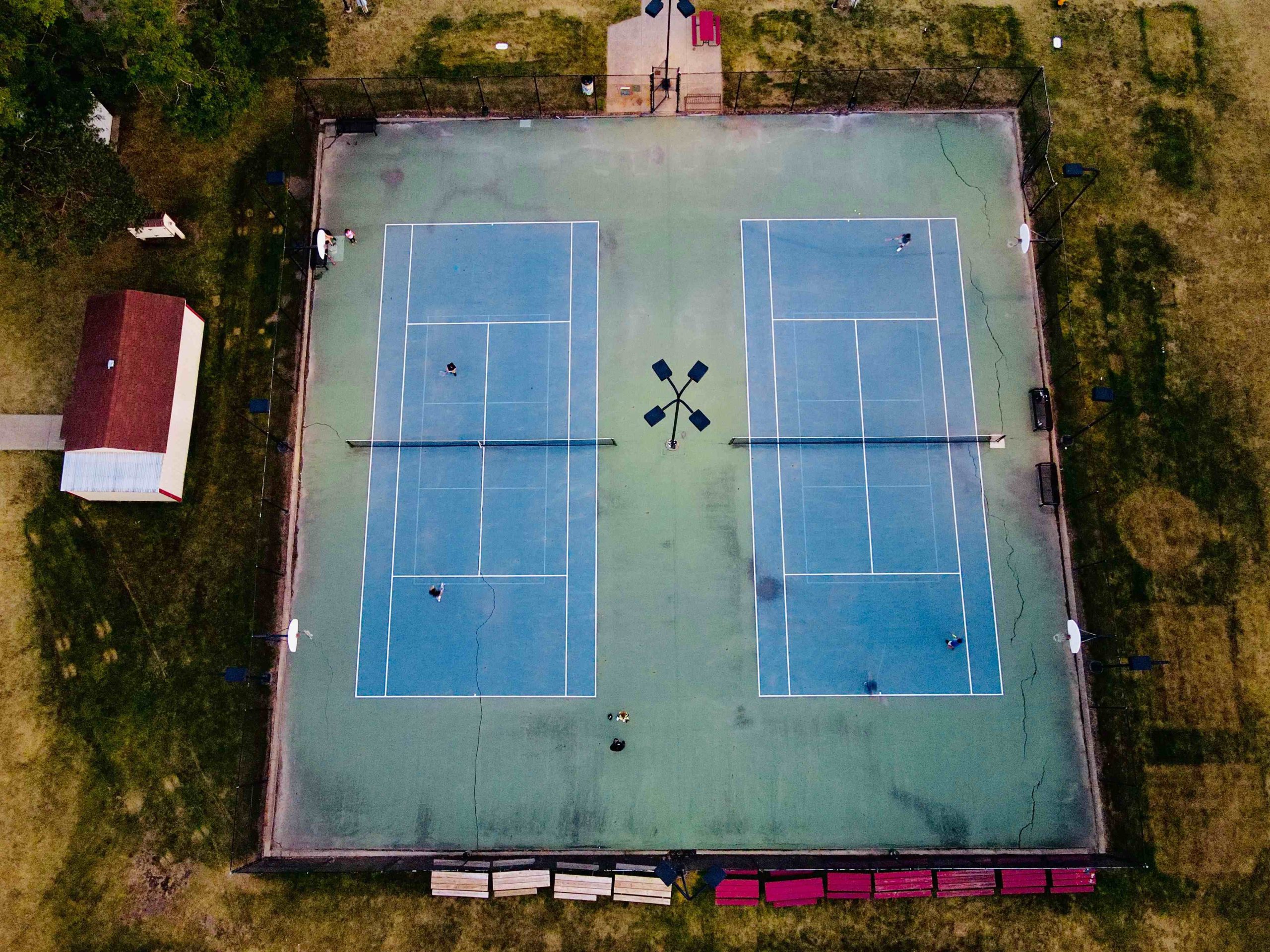
An uneven sports court affects ball movement, player stability, drainage, and surface performance. Moreover, the visible dip or bump is usually not the real problem. This happens due to the issues beneath the playing surface.
Professional court builders know that surface consistency clearly defines overall court systems. The ground preparation, sub-base construction, drainage, material selection, and installation influence how a court performs over time.
This is particularly essential in the UAE, where outdoor facilities face high temperatures, robust UV exposure, dust, and sudden rainfall. A correctly engineered court must account for these conditions from the beginning.
What Causes Sports Court Surfaces To Become Uneven?
There are many reasons that can cause issues with sports court surfaces and end up making at uneven. To make you clearly understand, this will help you get an idea about how it would help you with it.
- Poor Site Preparation
The disorder of the site can control how stable the finished court will be. Uneven ground, unsuitable soil, poor sorting, or weak areas beneath the proposed court can make movement after construction. If these circumstances are not identified during the initial site survey, difficulties may arise after the court is already in use.
AlmustaqbalAlsarea begins projects with consultation and site surveys to assess the site, layout, sport, and project requirements before moving into engineering and design.
- Inadequate Subgrade Compaction
A sports court needs a stable foundation. If the subgrade is not compacted consistently, different areas can settle at different rates. This is known as differential settlement.
Over time, it can produce:
- Depressions
- Low spots
- Cracks
- Uneven gradients
- Localized surface movement
Adding a high-quality surface cannot compensate for an unstable foundation. The supporting layers need to be properly prepared first.
- Poor Drainage
Water drainage is considered one of the major issues in sports facilities, especially in outdoor setups. If the rainwater cannot move out of the court, definitely, this could spoil the layers, persistent moisture, which can contribute to erosion and settlement.
This is important for football fields, where almustaqbal Alsarea’s service specification includes sub-base. And drainage engineering alongside turf, fencing, line marketing and floodlighting.
The same principle applies to hard courts. Drainage needs to be considered during site planning rather than added after construction.
- Incorrect Court Levels
A sports court does not simply need to look level. Its levels need to be accurately controlled. Incorrect gradients can create unwanted low areas where water collects. Inconsistent elevations can also affect the way the finished surface performs.
Accurate setting out, engineering drawings, and level checks help ensure that the constructed court follows the intended design.
AlmustaqbalAlsarea uses CAD drawings, structural engineering, and material selection as part of its engineering and design stage.
- Weak or Inconsistent Base Layers
The playing surface is only one part of a sports court. Depending on the facility, the complete system may include a prepared subgrade, aggregate base, concrete or asphalt substrate, cushioning components, and the final sports flooring.
If the supporting layers have inconsistent thickness or stability, movement can eventually become visible on the surface.
This is why professional court construction should focus on the complete system rather than treating the top coating as the main component.
- Unsuitable Sports Flooring
Different sports require different surface characteristics. Almustaqbal Alsarea provides sports flooring systems, including acrylic courts, EPDM rubber surfaces, synthetic turf, and multi-purpose systems for indoor and outdoor facilities.
For basketball facilities, the company offers acrylic and modular surface options, professional hoop and backboard systems, FIBA-compliant line marking, and lighting.
The correct flooring choice depends on the sport, location, expected usage, substrate, maintenance requirements, and environmental exposure.
- UAE Heat and Thermal Movement
Outdoor courts in the UAE operate under demanding climatic conditions. High temperatures can cause construction materials to expand and contract. Repeated thermal movement can place stress on surface systems, joints, and supporting components.
Material selection, therefore, needs to account for local conditions. Almustaqbal Alsarea’s construction approach includes hot-dip galvanized steel and materials specified for harsh UAE climate conditions, alongside in-house manufacturing and engineering.
- Water Entering Through Cracks
A crack is not always a finishing problem. If damaged areas allow water to reach the underlying layers, moisture can contribute to deterioration and movement. Repeated exposure can make a localized defect increasingly difficult to manage.
Before resurfacing a damaged court, the cause should be identified. Covering a structural problem with another surface layer may not provide a lasting solution.
- Landscaping and Ground Movement
The area surrounding a sports court can also influence its stability. Tree roots, irrigation systems, excess water, and changes in surrounding soil levels can affect the ground around the court.
A proper site assessment should therefore consider the complete project environment, not only the playing area. Identifying these factors during planning can help prevent avoidable movement later.
- Inconsistent Installation
Even suitable materials can produce poor results when installation lacks precision. Problems can occur through inconsistent surface preparation, incorrect layer thickness, poor joint treatment, unsuitable application methods, or inadequate curing.
This is why the installation stage matters as much as material selection. Almustaqbal Alsarea follows a four-stage process covering consultation and site survey, engineering and design, manufacturing, and installation and handover.
Why the Foundation Matters More Than the Surface
When a court develops an uneven area, the visible surface often receives the blame. However, the actual cause may be beneath it. Poor ground preparation, insufficient compaction, drainage issues, weak base layers, thermal movement, unsuitable materials and installation problems could affect the surface consistency.
However, the scenario is completely changed when it comes to the UAE. The construction system needs to respond to local climate conditions.
Almustaqbal Alsarea positions its services around a complete sports infrastructure, covering engineering, manufacturing, installation, flooring, lighting, steel works, and aftercare.
Planning a new sports court? Request a site assessment and tailored quotation based on your sport, location, flooring requirements, and project scope.
Final Thought
An uneven sports court is rarely caused by one isolated surface defect. The problem can begin with the soil beneath the court, continue through the sub-base and drainage system, and eventually appear on the finished playing surface.
That is why experienced court builders look beyond the visible flooring. Proper site assessment, accurate engineering, stable foundations, effective drainage, suitable sports flooring, and controlled installation all contribute to consistent long-term performance.
For sports facilities across the UAE, building the complete system correctly from the beginning is the better way to protect playing quality, safety, and the investment behind the facility.
Frequently Asked Questions
What causes an uneven sports court surface?
Common causes include poor site preparation, inadequate compaction, drainage problems, ground settlement, inconsistent base layers, thermal movement, unsuitable materials, and installation defects.
Can poor drainage make a sports court uneven?
Yes. Persistent water can weaken supporting layers, contribute to erosion or settlement, and create areas where water repeatedly collects.
Why is subgrade preparation important?
The subgrade supports the entire court structure. If it is unstable or inadequately compacted, movement can eventually appear in the finished surface.
Can an uneven sports court be repaired?
It depends on the cause. Minor surface defects may be repairable, while structural settlement or foundation movement can require more extensive corrective work.